
The Double Meaning of the Glass Room
The Glass RoomThis flow traces the room’s simultaneous meanings as shelter and exposure, a space of freedom that repeatedly becomes a stage for vulnerability.
increasing Bearing strength in each event
 decreasing
Bearing strength in each eventdecreasingA Room of Pure Space

Space Made Material
The architectural idea
Rainer von Abt wants to enclose space rather than emphasize walls. Glass and open planning make light appear almost tangible and the room seem larger than conventional domestic interiors.
The concept is both poetic and practical.
A promise of freedom
The design suggests a life without rigid divisions. Its spaciousness carries an ideal of openness that the family hopes to make real through daily use.
Privacy Made by Curtains
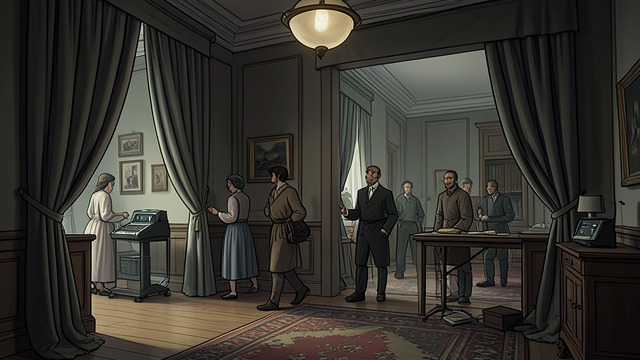
Flexible Boundaries
Domestic life adapts
Curtains allow Liesel and Viktor to divide the large room into areas for sitting, dining, and reading. The open plan is not a denial of privacy but an invitation to create it differently.
The family tests the design through ordinary needs and habits.
Openness remains selective
Residents control when the space is exposed and when it is screened. The house’s ideal depends on choices, not on glass alone.
The House as a Stage
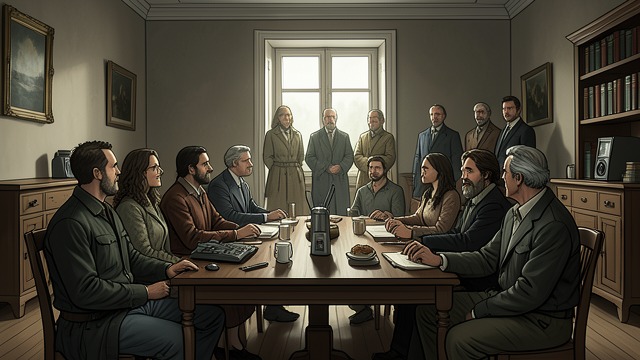
Visibility and Performance
Guests watch one another
The Glass Room makes parties and recitals feel public, even when they occur in a private home. At the refugee committee meeting, witnesses are arranged before an audience like performers.
The room’s openness intensifies both celebration and discomfort.
Who controls the gaze
Some people choose to appear; others are displayed by institutional arrangement. The room reveals that visibility can empower one person and expose another.
A Laboratory of Exposure
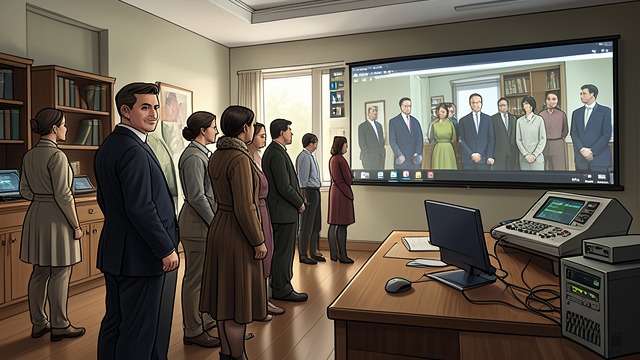
Visibility Without Consent
Subjects under observation
The biometric centre photographs naked subjects and records their bodies for racial classification. The bright room makes the process visible, but subjects have little control over how their images will be used.
Institutional authority determines the terms of exposure.
The ideal turns cruel
The room’s transparency becomes a tool of surveillance, not honesty. Its design cannot protect the examined or make the scientific purpose morally transparent.
Blindness Reframes the Room
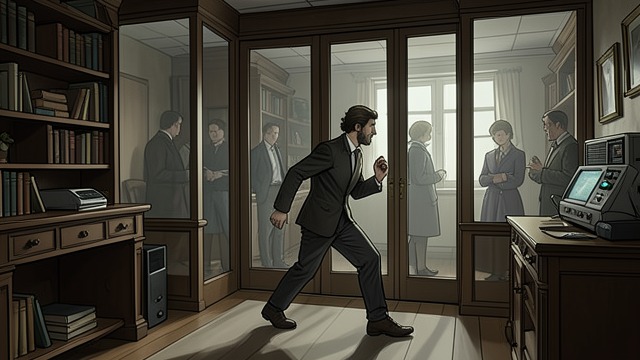
The Room Beyond Sight
A different way of knowing
Liesel cannot see the glass walls as she once did, but she recognizes the room by its scale, sound, and remembered layout. Blindness makes her knowledge of the space bodily and relational.
She senses who is present rather than relying on surfaces and reflections.
Transparency is not understanding
The room has always been visible, yet its history and human meanings remain difficult to know. Liesel’s return shows that perception is more than sight and that openness never guarantees complete understanding.
When Rainer von Abt presents the design
During the Landauers’ life in the house
During public gatherings and refugee testimony
During Nazi occupation
During Liesel’s return after thirty years
